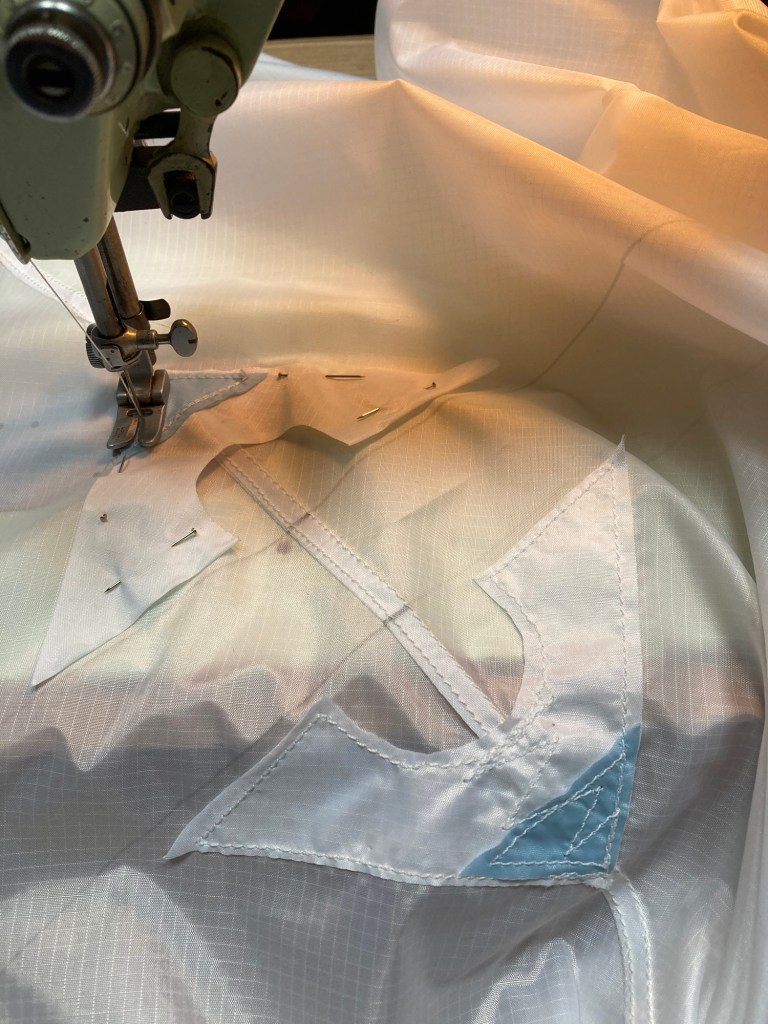
All my kites are entirely handmade, and some take fifty plus hours to sew. My original intention was that to make things achievable I’d have to avoid high tech materials, so set myself the brief that everything had to be made from commonly available materials, so I use ripstop nylon and wooden dowels, polyester thread and string, cheapest liquid superglue and ‘araldite’ type epoxy glues. The scale of the biggest has tested the limits of what’s possible, and I have begun to use glassfibre tubes as spars for these.
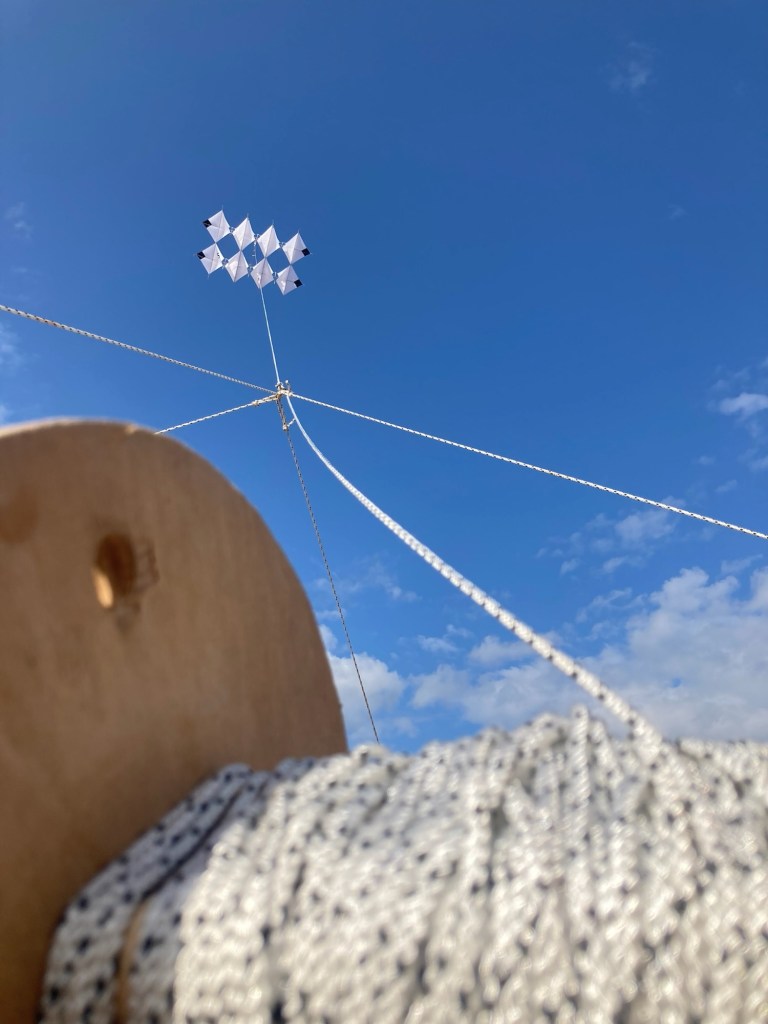
I use cheap polyester flying line. It’s a bit stretchy. The only difference from the stuff that comes with shop bought kites is that my heaviest are rated at over 500kg breaking strain.
Unlike sparless kites such as the wings used by kite surfers, my own prep and assembly is quite a protracted process, and successful flights are by no means guaranteed. This is mostly due to the fact that the kites are ludicrously finicky about windspeed, and prefer a surprisingly gentle breeze of as little as 8 mph. They WILL fly extremely well in a stronger wind, but in such conditions they can become unruly to the point of dangerous on the ground, and that’s quite undesirable. I have made a couple of significant design alterations to mitigate this, but experience has shown its just as well to watch the windspeed carefully before deciding to fly!
I weigh the big ones down on the beach with sandbags tied to a ground bridle system that I’ve devised, you’d not hold on to these kites as they’d definitely pull your arms off, and that’s for other kinds of kite sport anyway. For me the huge advantage of this is that after the effort that goes into launching I have my hands free and so always enjoy the opportunity to have a nice cup of tea.
Crashes do happen, and over time I’ve learned its best to be sanguine about them. The moments before and during take off or landing are ones of extreme vulnerability for the kites structure. If they roll, the point loading can be so great that breakages are likely, particularly with the old hardwood dowels. So keeping control of all the things and being methodical is really, really important, and of course safety of both operators and bystanders is absolutely paramount. Flying is great, as long as you stay away from the edges.
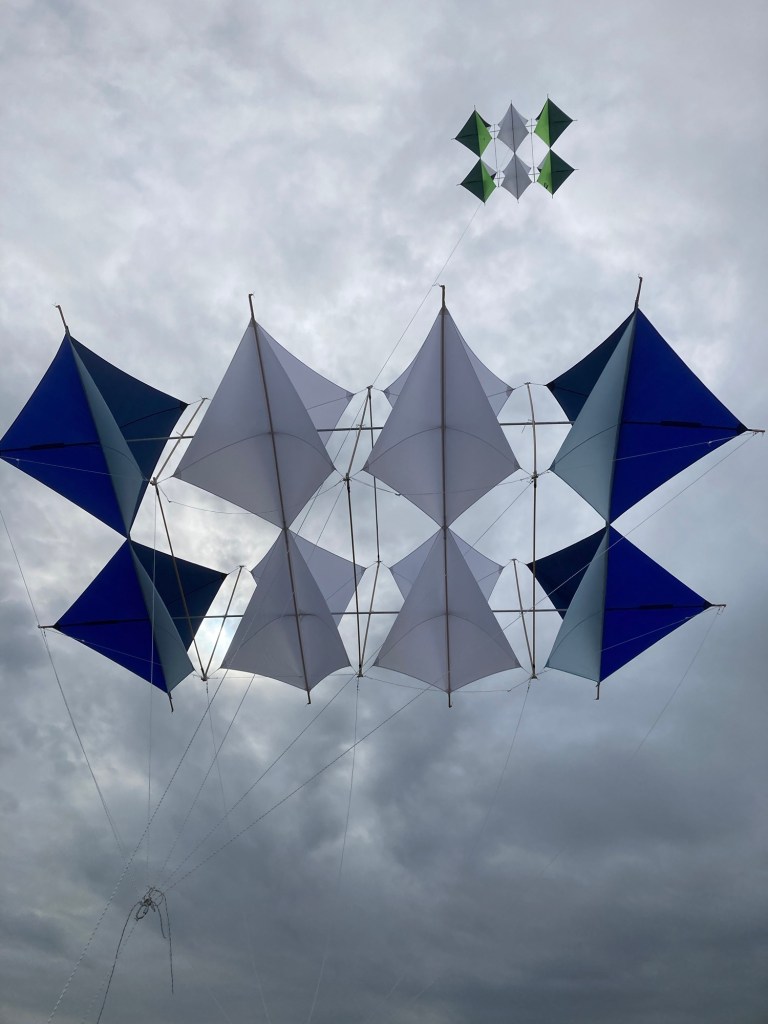
 GroundThing. AirThing.